Delhi - Hazur Sahib by Flight
( Departure from Delhi every Tuesday, Thursday and Sunday only)
Day 1 : Early morning Flight for Hazur Sahib from New Delhi. Reach Hazur Sahib. Pickup from Airport and drop at Hotel. Afternoon visit Gurudwara Hazur Sahib and attend evening Aarti. Overnight at hotel.
Day 2 : Breakfast, Day tour of Gurudwara Nanak Jheera, Bidar and Gurudwaras enroute, evening back at Nanded. Overnight at hotel.
Day 3 : Breakfast, Day tour of all local historical Gurudwaras around Nanded - Gurudwara Banda Ghat Sahib, Gurudwara Shikar Ghat Sahib, Gurudwara Nagina Ghat Sahib, Gurudwara Sangat Sahib, Gurudwara Mal Tekdi Sahib, Gurudwara Hira Ghat Sahib and Mata Sahib Devaan Ji. Evening drop at Hazur Sahib Airport for Flight for Delhi. Reach Delhi late evening.
Package Cost Per Person : From Rs 11000 to 16500 inclusive of Air Tickets, Hotel Accommodation and all Gurudwara tours by Car.
(Cost depends on Air Fares which are not fixed and change as per date of travel)
For more details, visit our website at http://www.sikhtourism.com/hazur-sahib.htm
Showing posts with label sikh temple. Show all posts
Showing posts with label sikh temple. Show all posts
Monday, March 21, 2011


Friday, May 14, 2010
Gurudwara Hemkund Sahib 2010 opening ceremony

Please be informed that Gurudwara Hemkund Sahib will be officially opened on June 1 and closing ceremony will be on Oct 4, 2010. This has been announced by the Gurudwara Committee.
Tuesday, June 02, 2009
Gurudwara Hemkund Sahib is Opened for Darshans
The doors of Gurudwara Hemkund Sahib have been opened on June 1, 2009.
Sangat can visit the gurudwara everyday till Oct 5, 2009.
For any details of Hemkund Sahib Yatra from Delhi & Amritsar, visit us at www.sikhtourism.com/hemkund.htm
Sangat can visit the gurudwara everyday till Oct 5, 2009.
For any details of Hemkund Sahib Yatra from Delhi & Amritsar, visit us at www.sikhtourism.com/hemkund.htm
Thursday, March 19, 2009
London gurdwara gutted in racist attack
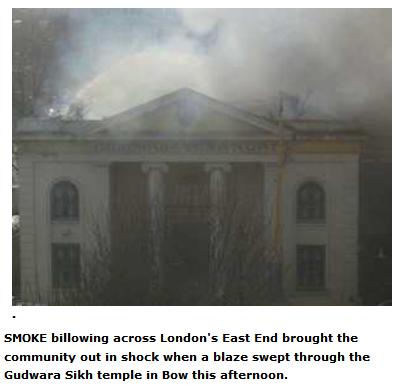
One of London's most important gurdwara, housing priceless religious books, has been gutted in a suspected racist attack in Britain, a news report said on Tuesday. Eye-witnesses on Tuesday said that a man, who entered the Gurdwara Sikh Sangat in East London, managed to escape just before flames were first seen. A group of women, who had spotted the intruder, tried to put out the raging flames in one of the holiest parts of the gurdwara, which was built at Bow in 1979.
Most of the gurdwara's roof collapsed and worshipers fear all but one of its eight holy books have been destroyed, the ‘Evening Standard’ newspaper said on Tuesday. Eye-witnesses described the suspected arsonist as being black or mixed-race. A worshiper said he had noticed racist graffiti on one of the gurdwara's outer walls in the past few weeks.
A criminal investigation has been launched and police and fire investigators are treating the blaze as suspicious. The building, which dates back to 1854 was formerly a synagogue and before that a chapel. The London Fire Brigade confirmed that 75 per cent of the building and the roof had been damaged by the fire.
"Police are treating this incident as suspicious," a Metropolitan police spokesman was quoted as saying by the British daily.
More than 50 firefighters battled the flame for almost eight hours after being called just after 2 p.m. yesterday, the report said.
Wednesday, March 11, 2009
Hola Mahalla at Anandpur Sahib
Hola Mohalla or Hola Mahalla or simply Hola is a Sikh festival that takes place on the first of the lunar month of Chet which usually falls in March. This, by a tradition estabished by Guru Gobind Singh, follows the Hindu festival of Holi by one day; Hola is the masculine form of the feminine sounding Holi. The word "Mohalla" is a Punjabi word that implies an organized procession in the form of an army column. But unlike Holi, when people playfully sprinkle color, dry or mixed in water, on each other, the Guru made Hola Mohalla an occasion for the Sikhs to demonstrate their martial skills in simulated battles.
Together the words "Hola Mohalla" stands for "mock fight". During this festival, processions are organised in the form of army type columns accompanied by war-drums and standard-bearers and proceeding to a given spot or moving in state from one gurdwara to another. The custom originated in the time of Guru Gobind Singh who held the first such mock fight event at Anandpur in February 1701.
The foothills of the Shivaliks in Ropar district of Punjab's north-eastern region, especially around the historic townships of Anandpur Sahib and Kiratpur Sahib, have, since 1701 been playing host to Hola Mohalla. Recently, the Indian government accorded it the status of a national festival. The military exercise, which was personally supervised by the guru, was carried out on the bed of the River Charan Ganga with the famous Hindu temple of Mata Naina Devi in the Shivaliks as the backdrop.
This annual festival held at Anandpur Sahib in Punjab and now replicated at other Gurdwaras worldwide was started by the tenth Sikh Guru, as a gathering of Sikhs for military exercises and mock battles on the day following the festival of Holi at Anandpur Sahib. It reminds the people of valour and defence preparedness, concepts dear to the Tenth Guru who was at that time battling the Mughal empire and the hill kings. On this three-day grand festival, mock battles, exhibitions, display of weapons, etc., are held followed by kirtan, music and poetry competitions. The participants perform daring feats, such as Gatka (mock encounters with real weapons), tent pegging, bareback horse-riding, standing erect on two speeding horses and various other feats of bravery.
There are also a number of Darbars where the Sri Guru Granth Sahib is present and kirtan and religious lectures take place. On the last day a long procession, led by Panj Pyaras, starts from Takhat Keshgarh Sahib, one of the five Sikh religious seats, and passes through various important Gurdwaras like Qila Anandgarh, Lohgarh Sahib, Mata Jitoji and terminates at the Takhat (Keshgarh).
For people visiting Anandpur Sahib, langars (voluntary community kitchens) are organized by the local people as a part of sewa (community service). Raw materials like wheat flour, rice, vegetables, milk and sugar are provided by the villagers living nearby. Women volunteer to cook and others take part in cleaning utensils and other manual tasks that need to be carried out. Traditional cuisine is served to the pilgrims who eat while sitting in rows on the ground. (Pangat)
The popularity of this festival may be judged from the fact that out of five Sikh public holidays requested by the Khalsa Diwan, Lahore in 1889, the Government approved only two - Holla Mahalla and the birth anniversary of Guru Nanak. Hola Mahalla is presently the biggest festival at Anandpur.
Sunday, March 08, 2009
Golden Temple Amritsar's Darshani Deori to be renovated by Experts

Shiromani Gurdwara Parbandhak Committee (SGPC) has agreed to get the renovation of Darshani Deori, which leads to sanctum sanctorum of the Golden Temple, done by experts with the support of the district administration.
Earlier, the SGPC had stopped the renovation of the deori being done through kar seva when The Tribune highlighted the use of gaudy colours, crude workmanship and sub-standard material in March last year. Talking to The Tribune, Deputy Commissioner KS Pannu said more than Rs 56 lakh would be spent on the conservation of the deori as per the tradition.
The experts have recommended that the cement plaster on the deori be removed with wooden hammer. The restoration work would include waterproofing of the terrace. Wooden boarding, wooden panels in niches above the entrance to a private TV channel office would be removed.Conservation of wall paintings on the cornice and bracket area of the deori by cleaning of painted surface has been recommended.
A team comprising Maninder Gill, Ajaydeep Jamwal and Tushar Chakarvarty has been entrusted with the restoration of Baba Atal and other heritage buildings. Meanwhile, in another major decision, the priceless frescoes that adorn the inner walls of the gurdwara would be recreated in its original designs and pattern. The entire cost of the project is estimated at Rs 1.20 crore and would be met through donations and contributions from other sources.
Monday, March 02, 2009
Hazi Rattan Dargah and Gurudwara, a symbol of communal harmony in Bathinda Fort
Punjab is also known as the land of Sufi saints and Gurus who always spread the message of communal harmony. A visit to the mausoleum devoted to Muslim Saint Haji Rattan in Bathinda Fort confirms the message.People of different castes, creed and religion visit Saint Haji Rattan's Dargah from far off places. Also located adjacent to the mausoleum is a gurudwara devoted to the same saint.
It is said while on his way to Talwandi Sabo, the tenth Sikh Guru, Guru Gobind Singh camped here for the night outside the mausoleum of the saint Haji Rattan. The tomb's keepers tried to dissuade the Guru from sleeping here saying that the place was haunted.Since Sikhs don't build tombs and the Guru like other Sikhs didn't believe in ghosts. So Guru Gobind Singh spent the night at the place to show the people that such superstitions had no ground.
Later, marking this visit, a gurudwara was built near the mausoleum of the saint and today Sikhs, Muslims and Hindus pay obeisance at both the spots.
The gurudwara and mausoleum have helped unite the local residents who share their problems and celebrate religious occasions.
Sunday, March 01, 2009
Devotees offer toy plane at Gurudwara Talhan to go abroad
A large number of devotees, seeking greener pastures abroad, head towards a Gurudwara devoted to Sant Baba Nihal Singh Shaheedan in Village Talhan of Punjab's Doaba region. Thousands of individuals in Doaba region hold this holy shrine in high-esteem. And, these devotees include many of those who have long been nurturing a dream to get a visa to go abroad but couldn't get it. The popular feeling about this Gurudwara is that anyone offering a toy plane here can have his or her wish to go abroad fulfilled. Hence a lot of people visit this holy shrine and make a wish to go abroad. For this, the devotees make an offering of toy planes; inscribed with names of different carriers. Devotees buy these toy planes from the shops outside this Gurudwara and they offer it to Sri Guru Granth Sahib.
It all started a few months back, when the word spread that wishes of settling abroad would be fulfilled if one offered a toy plane at the shrine. On Sundays, about 40-50 planes are offered. In most cases, devotees who wish to fly to a particular country offer a toy plane of the airline of that country.
In Doaba region, where going abroad is dream of most people, a large number of people have an unshakable faith in the Gurudwara.
It has become a difficult task for the Gurudwara authorities to store so many toy planes. Punjabi youth, who dream of greener pastures abroad, come in large numbers after they hear stories of wishes of their friends to settle abroad being fulfilled after they offered planes at the Talhan Gurudwara.
"Whenever somebody's wish of going abroad is fulfilled, they come here at the Gurudwara to offer a plane. Punjabis from all parts of the world - England, America, Canada and many other countries come here," said one young devotee.
For the Punjabi youth, spending three to 10 dollars in buying a toy airplane hardly matters, if it increases the possibility of ultimately realizing a million-dollar dream.
Sunday, November 02, 2008
Rousing welcome to Guru Granth Sahib at Sachkhand Hazur Sahib
The Guru Granth Sahib was given a rousing welcome at the Takhat Sachkhand Shri Hazur Abchalnagar Sahib Gurdwara, Nanded on Thursday as it arrived for consecration in connection with 300 years of its elevation as the eternal Guru of Sikhs.
This Gurdwara is central to the ‘Gurta Gaddi’ celebrations, for which pilgrims from across the world have been registering since October 27 when the festivities actually began. Prime Minister Manmohan Singh was among the devotees who paid their obeisance at the Gurdwara on Thursday.
Music and colours that are typical of Sikhs characterised the Gurta Gaddi ‘nagar keertan’ procession, which started in the morning from the Nagina Ghat Sahib Gurdwara on the banks of Godavari. The Guru Granth Sahib was carried in a ‘palki’ (palanquin) placed in a specially designed vehicle.
The Gurta Gaddi diwas was one of the two most important days, the other being the observance of Guru Gobind Singh’s ‘parlok gaman’ (departure for the heavenly abode) on November 3.
The straight road between the two Gurdwaras was choked with an estimated 3 lakh pilgrims. The bright saffron and blue of the Nihangs and Akalis and the white clothes worn by other devotees lent colour to the procession. Devotees danced ‘bhangda’ to the robust beats of the dhol and the band and sang devotional songs. Some marched to Sikh martial tunes. The bhangda dance provided for the folk component, while the keertans gave a touch of devotion. The martial slogan Bole so nihal ... Sat Sri Akal and the tune Deh Shiva bar mohe ehe shubh karman te kabhon na taraun ... ” complemented the other kinds of music.
The sacred Guru Granth Sahib was received at the main gate amid the ‘shastra salami’ of swords. The process of enthroning it included its ‘prakash’ and application of sandalwood tilak and aarti. The Guru Granth Sahib was opened at random for the ‘hukamnama’ or the edict for the day.
Monday, October 13, 2008
Gurudwara Saragarhi memorial, a tribute to the gallantry of 21 Sikh soldiers
Every year Sikhs in Punjab's Ferozepur district mark Saragarhi Day to remember the unparalleled valour, demonstrated by 21 Sikh soldiers on September 12, 1897 while participating in the battle of Saragarhi against a 10,000 strong enemy force.The Sikh soldiers of the 4th Battalion (then 36th Sikhs) of the Sikh Regiment of British India were sent to defend Fort Lockhart at Saragarhi post, in North West Frontier Province (now in Pakistan). Some 10,000 tribesmen had attacked the Saragarhi post. The battle lasted over six hours and one by one the defenders kept falling while trying to protect their post. But they did not surrender. The day of battle is observed each year as `Saragarhi Day' to mark the event.
The Gurudwara, named Saragarhi memorial, in Ferozepur today stands as a protected monument and is a tribute to those Sikh soldiers who sacrificed their lives. The memorial gurudwara, surrounded by half-a-dozen small and big cannons with names of the 21 brave soldiers inscribed on its walls, was built by the army with stones from the Saragarhi post. It was declared open in 1904 by Sir Charles Revz. Saragarhi memorial is an inspiration to many a symbol of courage and bravery.
Captain Sadhu Singh of the Sikh Regiment, said:" About 110-years-ago, on 12th of September, 1897 a war was fought, in which 21 brave soldiers were martyred while fighting under the leadership of Hawaldar Ishwar Singh at Saragarhi Post. In memory of those martyrs, we celebrate this day every year. Whatever our ancestors have given us in legacy is for the making of our nation and community proud. "
On the occasion of 110th anniversary of the Saragarhi Day a cross-country run was held in which hundreds of civilians as well as army personnel participated. After covering a distance of nine miles on the Faridkot-Ferozepur Road, the run culminated at the Saragarhi Memorial Gurudwara. The Sikh Regiment organized cross-country and cycle rally with the support of the state government to inspire youth and instill a spirit of sacrifice for the motherland in them.
Ferozepur city in South-west Punjab is on the sensitive border with Pakistan that has witnessed three wars. The border village lacks medical facilities and to make the Saragarhi Day a memorable one the army also organized a free medical camp .
Each year by observing the Saragarhi Day, the spirit and inspiration is kept alive from generation to generation.
Monday, October 06, 2008
Sikh guru in Heroes of Environment list
Heaping praises on environmentalist Baba Balbir Singh Seechewal for launching a campaign to clean up the polluted 'Kali Bein' in Punjab, Time magazine has profiled the Sikh sect leader as one of the 30 'Heroes of Environment' selected from across the globe. Describing Seechewal as the man 'who set out to clean up this mess', the magazine lauded him for mobilising people to launch a movement that taught the people why they should clean the 'Kali Bein'.
'We have proved that it is possible to restore our rivers to a pristine condition if we all come together,' Seechewal told the Time magazine.
'It is time to do that on a bigger scale,' he said.
'Kali Bein', the 160-km-long river in Hoshiarpur district in Punjab, was reduced to a filthy drain into which people from more than six towns and 40 villages emptied their waste, leaving neighbouring farmlands parched. The river was revived a couple of years back after Seechewal and his followers took up the cause and raised funds to clean the river, which is now a favourite picnic spot.
Sikhs believe that Guru Nanak Dev attained enlightenment after taking a dip in 'Kali Bein' 500 years back before founding Sikhism.
'In 2000, Seechawal, a Sikh holy man, set out to clean up the mess in the river. The scale of the task was gigantic-volunteers cleared the entire riverbed of water hyacinth and silt, and built riverbanks and roads alongside the river,' the magazine wrote.
Seechawal launched a public-awareness campaign asking the villagers to dispose of their sewage elsewhere and some people revived traditional methods of waste disposal and treatment.
'A government order to divert water from a nearby canal was eventually obtained. As the riverbed was cleared, natural springs revived and the river began to fill up. Since then trees have been planted along its banks and fishing has been preserve biodiversity,' the magazine said.
Tuesday, September 02, 2008
World's first Sikh University to come up at Fatehgarh Sahib in Punjab
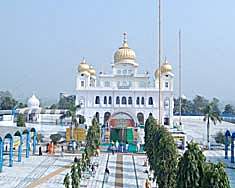 Fatehgarh Sahib, Punjab, is a holy town for Sikhs, where two sons of the 10th Sikh Guru, Gobind Singh, attained martyrdom in the 18th century, is set to be home to the first Sikh university - the Sri Guru Granth Sahib World University.
Punjab Chief Minister Parkash Singh Badal will Monday lay the first stone of the foundation monument - the 'Minar-e-Ikonkar' (Tower of God is one) - in this historic Sikh holy town, around 60 km from Chandigarh.
The university, spread over 84 acres given by the Shiromani Gurudwara Prabandhak Committee (SGPC), is coming up in an year which also marks the 300th anniversary of the 'Gurgaddi' (installation) of the Sikh holy book, Guru Granth Sahib, at 'Harmandar Sahib', the holiest of Sikh shrines, in Amritsar. Though founded with traditional values espoused by the Sikh religion, the university will deal with contemporary issues like the authentic interpretation of Sikhism in the modern context and idiom, role of Sikhism in the making of the 21st century society and the third millennium civilization, a state government spokesman said.
It also aims at addressing contemporary problems of Sikh identity vis-a-vis forces and processes of globalisation, facts about the Sikh diaspora and role of Sikhism and global interfaith dialogue, he added.
Sikhism is one of the youngest religions in the world, founded by the first Sikh guru, Nanak Dev, in the 15th century. The Sikhs, considered one of the most progressive communities, traditionally hail from the north Indian state of Punjab.
Besides the routine courses in arts, science and other fields, the university will focus on emerging technologies such as bio-technology, nano-technology, information technology and disciplines like ecology, human rights, feminism, empowerment of the down-trodden and other related spheres.
To give the university a 21st century outlook, it is looking at multi-national companies and other international universities for tie-ups. The spokesman said that arrangements will be made with foreign universities to enable scholars of Sri Guru Granth Sahib World University to be sent abroad as part of the course study.
Regional and overseas extension centres of the University will be established in India, North America, Europe, Southeast Asia and other countries wherever Sikhs and Sikhism have reached.
The university authorities are also planning to rope in the Sikh diaspora in the new venture.
The university also gives the students an option to undertake advanced studies in Sikhism - its philosophy, ethics, relation with other religions, history, music, linguistics, holy shrines and historical places associated with the religion, architecture, paintings, way of life, martial arts, diaspora and role of Sikhism in the 21st century.
Subscribe to:
Posts (Atom)