Delhi - Hazur Sahib by Flight
( Departure from Delhi every Tuesday, Thursday and Sunday only)
Day 1 : Early morning Flight for Hazur Sahib from New Delhi. Reach Hazur Sahib. Pickup from Airport and drop at Hotel. Afternoon visit Gurudwara Hazur Sahib and attend evening Aarti. Overnight at hotel.
Day 2 : Breakfast, Day tour of Gurudwara Nanak Jheera, Bidar and Gurudwaras enroute, evening back at Nanded. Overnight at hotel.
Day 3 : Breakfast, Day tour of all local historical Gurudwaras around Nanded - Gurudwara Banda Ghat Sahib, Gurudwara Shikar Ghat Sahib, Gurudwara Nagina Ghat Sahib, Gurudwara Sangat Sahib, Gurudwara Mal Tekdi Sahib, Gurudwara Hira Ghat Sahib and Mata Sahib Devaan Ji. Evening drop at Hazur Sahib Airport for Flight for Delhi. Reach Delhi late evening.
Package Cost Per Person : From Rs 11000 to 16500 inclusive of Air Tickets, Hotel Accommodation and all Gurudwara tours by Car.
(Cost depends on Air Fares which are not fixed and change as per date of travel)
For more details, visit our website at http://www.sikhtourism.com/hazur-sahib.htm
Showing posts with label sikh gurudwara tours. Show all posts
Showing posts with label sikh gurudwara tours. Show all posts
Monday, March 21, 2011
Tuesday, June 02, 2009
Gurudwara Hemkund Sahib is Opened for Darshans
The doors of Gurudwara Hemkund Sahib have been opened on June 1, 2009.
Sangat can visit the gurudwara everyday till Oct 5, 2009.
For any details of Hemkund Sahib Yatra from Delhi & Amritsar, visit us at www.sikhtourism.com/hemkund.htm
Sangat can visit the gurudwara everyday till Oct 5, 2009.
For any details of Hemkund Sahib Yatra from Delhi & Amritsar, visit us at www.sikhtourism.com/hemkund.htm
Sunday, March 29, 2009
Delhi Hemkund Sahib Yatra 2009
Hemkund Sahib Yatra is again starting in June 2009 and Sikhtourism has made special Delhi Hemkund Sahib Tour Packages for Pilgrimages.
Sri Hemkund Sahib Tours are available only in the summer, between June and October.
Details of the Tour are :
DELHI - HEMKUND SAHIB - DELHI (6 Nights - 7 Days)
Day 1. Delhi - Rishikesh (Drive 240 km)
Day 2. Rishikesh - Joshimath (Drive 257 km)
Day 3. Joshimath - Govind Ghat - Govind Dham(ghangharia) (Drive 21km, Trek 13km )
Day 4. Govind Dham - Hemkund Sahib - Govind Dham (Ghangharia Trek (12 km)
Day 5. Govind Dham - Govind Ghat - Joshimath (Trek 13 km, Drive 21 km)
Day 6. Joshimath - Rishikesh (Drive 257 km)
Day 7. Rishikesh - Delhi (Drive 240 km)
For more details and Prices, visit at Hemkund Sahib Yara
Thursday, March 19, 2009
London gurdwara gutted in racist attack
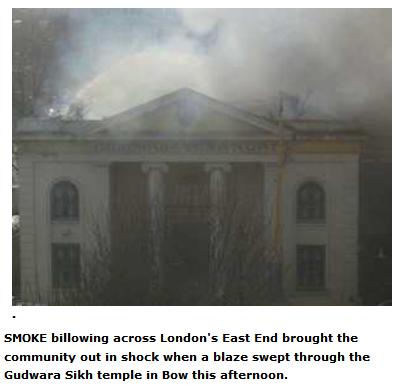
One of London's most important gurdwara, housing priceless religious books, has been gutted in a suspected racist attack in Britain, a news report said on Tuesday. Eye-witnesses on Tuesday said that a man, who entered the Gurdwara Sikh Sangat in East London, managed to escape just before flames were first seen. A group of women, who had spotted the intruder, tried to put out the raging flames in one of the holiest parts of the gurdwara, which was built at Bow in 1979.
Most of the gurdwara's roof collapsed and worshipers fear all but one of its eight holy books have been destroyed, the ‘Evening Standard’ newspaper said on Tuesday. Eye-witnesses described the suspected arsonist as being black or mixed-race. A worshiper said he had noticed racist graffiti on one of the gurdwara's outer walls in the past few weeks.
A criminal investigation has been launched and police and fire investigators are treating the blaze as suspicious. The building, which dates back to 1854 was formerly a synagogue and before that a chapel. The London Fire Brigade confirmed that 75 per cent of the building and the roof had been damaged by the fire.
"Police are treating this incident as suspicious," a Metropolitan police spokesman was quoted as saying by the British daily.
More than 50 firefighters battled the flame for almost eight hours after being called just after 2 p.m. yesterday, the report said.
Sunday, March 01, 2009
Devotees offer toy plane at Gurudwara Talhan to go abroad
A large number of devotees, seeking greener pastures abroad, head towards a Gurudwara devoted to Sant Baba Nihal Singh Shaheedan in Village Talhan of Punjab's Doaba region. Thousands of individuals in Doaba region hold this holy shrine in high-esteem. And, these devotees include many of those who have long been nurturing a dream to get a visa to go abroad but couldn't get it. The popular feeling about this Gurudwara is that anyone offering a toy plane here can have his or her wish to go abroad fulfilled. Hence a lot of people visit this holy shrine and make a wish to go abroad. For this, the devotees make an offering of toy planes; inscribed with names of different carriers. Devotees buy these toy planes from the shops outside this Gurudwara and they offer it to Sri Guru Granth Sahib.
It all started a few months back, when the word spread that wishes of settling abroad would be fulfilled if one offered a toy plane at the shrine. On Sundays, about 40-50 planes are offered. In most cases, devotees who wish to fly to a particular country offer a toy plane of the airline of that country.
In Doaba region, where going abroad is dream of most people, a large number of people have an unshakable faith in the Gurudwara.
It has become a difficult task for the Gurudwara authorities to store so many toy planes. Punjabi youth, who dream of greener pastures abroad, come in large numbers after they hear stories of wishes of their friends to settle abroad being fulfilled after they offered planes at the Talhan Gurudwara.
"Whenever somebody's wish of going abroad is fulfilled, they come here at the Gurudwara to offer a plane. Punjabis from all parts of the world - England, America, Canada and many other countries come here," said one young devotee.
For the Punjabi youth, spending three to 10 dollars in buying a toy airplane hardly matters, if it increases the possibility of ultimately realizing a million-dollar dream.
Sunday, November 02, 2008
Rousing welcome to Guru Granth Sahib at Sachkhand Hazur Sahib
The Guru Granth Sahib was given a rousing welcome at the Takhat Sachkhand Shri Hazur Abchalnagar Sahib Gurdwara, Nanded on Thursday as it arrived for consecration in connection with 300 years of its elevation as the eternal Guru of Sikhs.
This Gurdwara is central to the ‘Gurta Gaddi’ celebrations, for which pilgrims from across the world have been registering since October 27 when the festivities actually began. Prime Minister Manmohan Singh was among the devotees who paid their obeisance at the Gurdwara on Thursday.
Music and colours that are typical of Sikhs characterised the Gurta Gaddi ‘nagar keertan’ procession, which started in the morning from the Nagina Ghat Sahib Gurdwara on the banks of Godavari. The Guru Granth Sahib was carried in a ‘palki’ (palanquin) placed in a specially designed vehicle.
The Gurta Gaddi diwas was one of the two most important days, the other being the observance of Guru Gobind Singh’s ‘parlok gaman’ (departure for the heavenly abode) on November 3.
The straight road between the two Gurdwaras was choked with an estimated 3 lakh pilgrims. The bright saffron and blue of the Nihangs and Akalis and the white clothes worn by other devotees lent colour to the procession. Devotees danced ‘bhangda’ to the robust beats of the dhol and the band and sang devotional songs. Some marched to Sikh martial tunes. The bhangda dance provided for the folk component, while the keertans gave a touch of devotion. The martial slogan Bole so nihal ... Sat Sri Akal and the tune Deh Shiva bar mohe ehe shubh karman te kabhon na taraun ... ” complemented the other kinds of music.
The sacred Guru Granth Sahib was received at the main gate amid the ‘shastra salami’ of swords. The process of enthroning it included its ‘prakash’ and application of sandalwood tilak and aarti. The Guru Granth Sahib was opened at random for the ‘hukamnama’ or the edict for the day.
Monday, October 13, 2008
Gurudwara Saragarhi memorial, a tribute to the gallantry of 21 Sikh soldiers
Every year Sikhs in Punjab's Ferozepur district mark Saragarhi Day to remember the unparalleled valour, demonstrated by 21 Sikh soldiers on September 12, 1897 while participating in the battle of Saragarhi against a 10,000 strong enemy force.The Sikh soldiers of the 4th Battalion (then 36th Sikhs) of the Sikh Regiment of British India were sent to defend Fort Lockhart at Saragarhi post, in North West Frontier Province (now in Pakistan). Some 10,000 tribesmen had attacked the Saragarhi post. The battle lasted over six hours and one by one the defenders kept falling while trying to protect their post. But they did not surrender. The day of battle is observed each year as `Saragarhi Day' to mark the event.
The Gurudwara, named Saragarhi memorial, in Ferozepur today stands as a protected monument and is a tribute to those Sikh soldiers who sacrificed their lives. The memorial gurudwara, surrounded by half-a-dozen small and big cannons with names of the 21 brave soldiers inscribed on its walls, was built by the army with stones from the Saragarhi post. It was declared open in 1904 by Sir Charles Revz. Saragarhi memorial is an inspiration to many a symbol of courage and bravery.
Captain Sadhu Singh of the Sikh Regiment, said:" About 110-years-ago, on 12th of September, 1897 a war was fought, in which 21 brave soldiers were martyred while fighting under the leadership of Hawaldar Ishwar Singh at Saragarhi Post. In memory of those martyrs, we celebrate this day every year. Whatever our ancestors have given us in legacy is for the making of our nation and community proud. "
On the occasion of 110th anniversary of the Saragarhi Day a cross-country run was held in which hundreds of civilians as well as army personnel participated. After covering a distance of nine miles on the Faridkot-Ferozepur Road, the run culminated at the Saragarhi Memorial Gurudwara. The Sikh Regiment organized cross-country and cycle rally with the support of the state government to inspire youth and instill a spirit of sacrifice for the motherland in them.
Ferozepur city in South-west Punjab is on the sensitive border with Pakistan that has witnessed three wars. The border village lacks medical facilities and to make the Saragarhi Day a memorable one the army also organized a free medical camp .
Each year by observing the Saragarhi Day, the spirit and inspiration is kept alive from generation to generation.
Saturday, October 04, 2008
Nanded, Hazur Sahib Airport to be operational from Oct 4, 2008
Sikh religious town of Nanded will come on the country’s civil aviation map from Oct 4, 2008 with an inaugural flight from Mumbai, an official said here Friday. The flight to Nanded, around 625 km from Mumbai, will immensely benefit thousands of Sikhs from India and around the world who are planning to visit there this month on the occasion of the 300th anniversary celebrations of Gurta Gaddi Guru Granth Sahib of Khalsa Sikh Panth.
Keeping in view the sentiments of the predominantly Sikh population of Nanded, the airport has been named “Shri Guru Gobind Singhji Airport”.
The town also has a monument “Shri Huzur Abchalanager Sachkhand Gurudwara”, dedicated to the 10th Sikh Guru, which is visited by millions of devotees throughout the year, the official said.
Nanded, with a population of 500,000, had a small airstrip constructed 50 years ago and was upgraded in 1974 to handle Vayudoot and other small and private aircraft flights. However, all commercial operations ceased from the airport in 1990.
Now, the airport has been upgraded at a cost of Rs.940 million and the facilities available include a huge terminal building to handle 300 passengers and a runway to handle big aircraft like Boeing 737s and Airbus 319-320.
It also now has three parking bays for large aircraft, six check-in counters, and all other passenger and flight operations facilities, including night operations.
Kingfisher Airlines will operate a regular service on the new Mumbai-Nanded-Latur sector, departing here at 6 a.m., halting at Nanded and reaching Latur at 8.20 a.m. The flight will depart from Latur at 8.45 a.m. and after a halt at Nanded, arrive in Mumbai at 10.10 a.m. The flights will operate Monday, Wednesday and Friday.
Friday, September 12, 2008
Hazur Sahib, Nanded readies to receive Sikh multitudes for Gurta Gaddi Diwas


With the historic day less than two months away, massive preparations are afoot to prepare for the multitudes of Sikhs that would throng this historic religious town for the Tercentenary celebrations of the Guruship of Guru Granth Sahib. Situated on the banks of the Godavri, the fourth Takht of the Sikh nation at Nanded is gradually sprucing up to welcome the sea of humanity that is likely to reach here on or around October 20 to celebrate a concept unparalleled in the religious history of the world. All religions have their scriptures and all are sacred. The Sikhs are blessed with having their Guru – their World Teacher – with them all the time. Sikhs will celebrate the unique bestowing of Guruship to the Word of the Gurus by the tenth Master, Guru Gobind Singh, in 1708 at Nanded, before he passed away.
Around the main Gurdwara and the famous Baba Nidhan Singh Langar, cleanliness on the streets and in the inn and the outer façade of the Langar Sahib is noteworthy.
Though there is no sarovar surrounding the main Gurdwara like Darbar Sahib Amritsar, the new periphery of Huzur Sahib now has some architectural resemblance to the housing complexes that surround the Golden Temple. The resplendence and glory of the neighbourhood is gradually getting a sheen though the roads and other infrastructure leading to the main sanctum sanctorum, the road outside the railway station and the airport are still to be completed. The Takht management committee expects all preparations to be finalized before the D-day.
In twenty villages around Nanded, tents with basic hygiene and sanitation facilities are being set up by the Maharashtra government. The Takht Management Committee has also built more inns and rest houses for visitors from India and foreign countries.
Around the historic Gurdwaras of Nanded, all efforts and activities are by the Sikh Sangat. The organization of tours and travels is also by the Sangat themselves. Except for some roads which are being rebuilt, which in any case is the responsibility of the state, there was no visible evidence of any significant expenditure by the state or central government, the SGPC or DSGMC. As in the case of all centennial celebrations of the Sikhs over the last decade, as far as these organizations are concerned, Sikhs largely feel there will be some uproar for a week and then it will be back to mundane basics.
Kar Sewa Babas are making military style preparations for the Langar as they expect to feed lakhs of people during the course of the celebrations. Langar utensils are being purchased in thousands and a fleet of volunteers are being pressed into the gigantic task.
Guru Gobind Singh’s clarion call in 1708 was unmistakably clear: “Agya Payi Akal Ki, Tabe Chalayo Panth, Sabh Sikhan Ko Hukam Hai, Guru Manyo Granth.” – By order of the God Almighty, the Khalsa Panth was formed. It is a diktat to all Sikhs that henceforth your Guru is only the Granth. This call and its deeper meaning have rattled many religious thinkers and the concept of the Word as the Guru has still to be appropriately explained by the Sikhs to the world.
The last days of the tenth Master, Guru Gobind Singh was spent at Nanded and when the Sikh world would celebrate the Guruship of Guru Granth Sahib, it would also recall the anniversary of the passing away of the Tenth Master. The consciousness of the Sikh people to revere the teachings as enshrined in Guru Granth Sahib and which teachings are not only that of the Sikh Gurus but also other religious leaders of the Bhakti movement and even before has brought them in confrontation with many pseudo-movements within the Sikh fold and outside it -which do not adhere to this doctrine. Forces attempting to undermine the distinctness of Guru Granth Sahib abound but a very large section of the community continues to have abiding faith in it as a living embodiment.
As usual and as expected, I could not find any literature in Punjabi, English, Hindi or the local language Marathi inviting the Sangat to the Takht or telling the visitor the significance of the coming occasion. The 300-Saal–Guru de Naal T shirt was omnipresent everywhere in the stalls all along the promenade outside the Takht.
Abchalnagar incorporates the land of some forty villages donated two centuries ago by the Nizam of Hyderabad -Sikhandar Jah to the Sikhs in gratitude of the support given to him by the Sikh armies of Maharaja Ranjit Singh. Very little of that land remains as a majority of it has been frittered away by a lackadaisical and short-sighted management committee whose custodians have invariably failed to protect the interests of the Sikhs under temptation of pecuniary gain and leadership and political pressure of the local government.
The destruction of the heritage sites-the Ramgharia Bunga and the Baradari alongside the Takht Sahib Gurdwara, the need for upkeep and maintenance of all the historic Gurdwaras in around fifty kilometer radius of Takht Apchalnagar Huzur Sahib, the complete rehabilitation of those families who have been uprooted from their home and hearth to make way for expansion plans, the democratization of the management set-up of the Takht and the poverty of the local Sikhs were stark realities one finds difficult to ignore. One also hopes that with such huge focus on the celebrations, the various management committees and voluntary organizations the world over would not continue to ignore this aspect once the celebrations are over.
After 300 years with the Guru, there should be no need left for the community or any of its individuals to indulge in self-pity. The community needs to stand tall, capable and strong and be counted amongst the comity of nations. If the Sikh nation does succeed, the objective of spending millions at Nanded would have been achieved.
Tuesday, August 26, 2008
Negotiations to Purchase Historic Gurdwara Baoli Sahib at Jagannath Puri in Orissa
Gurdwara Baoli Sahib at Jagannath Puri in the state of Orissa, where Guru Nanak unearthed a natural spring and where he sang the shabad ‘Gagan mae thaal rav chand deepak banay, Taaraka mandal janak moti...’ that challenged the concept of aarti, is a rather miserable looking place.
Like many other Sikh historic places, Gurdwara Baoli Sahib is desperately in need of conservation.
A painting of Guru Nanak languishing in the gurdwara shows the Guru sitting under a tree with his two sons sitting to his right, and his companion, Mardana, playing the rabaab, also to his right. When I saw it in February, it was in very sad condition.
The decrepit baoli, a stepped well that goes down to the water surface, marks the spot in the sand where Guru Nanak dug his staff to release a spring of sweet water, the only source of drinkable water in the area.
The gurdwara is very small. There are two rooms, one for Guru Granth Sahib and the other for Lord Jagannath. The caretaker priest does both Sikh and Hindu prayers.
About a mile from Gurdwara Baoli Sahib stands a newer gurdwara, Nanakmata Sahib, which was built less than 10 years ago. It has 24-hour open langar and a building next door for travelers to stay.
There is also a lot across the road, just in front of the gurdwara, large enough to build three homes. It was donated to the gurdwara by the city of Puri. Gurdwara officials said they were planning to build a children’s park and a library named after one of the Panj Piaray, Mohkam Singh, who was from Puri.
Puri does not have any Sikh resident, but the sangat regularly goes to Gurdwara Nanakmata Sahib from the neighboring state capital of Bhubaneshwar and from the city of Cuttack.
Gurdwara Nanakmata Sahib is working with the Shiromani Gurdwara Parbandhak Committee to take possession of the old historical Gurdwara Baoli Sahib. Its secretary said the government and the Brahmin family at Baoli Sahib had agreed, in principle, to hand it over, at an agreed price.
When that will happen is not known, but hope the Baoli Sahib family is given millions of rupees for their seva and for passing the responsibility of the gurdwara on to the Sikhs.
Jagannath Puri, on the shores of the Bay of Bengal, is one of the four most sacred places of pilgrimage for Hindus. A special ritual, called aarti, is performed in praise of Lord Jagannath, Lord of the universe. Aarti worship involves circulating a metal platter on which little lamps with butter-soaked wicks are lit.
Guru Nanak watched pilgrims doing aarti at Jagannath Puri during his odyssey in the mid 1500s. He did not participate. Instead, he sang a shabad about the true realm of Waheguru, in which aarti is meaningless.
Sunday, August 24, 2008
Sikh Tourism introduces Punjab Village Tour

Sikh Tourism has introduced a new travel package "Punjab Village Tour" which will take you to Sikh Cultural, Religious, Rural & Heritage life of Punjab Cities of Patiala, Amritsar, Anandpur and Chandigarh along with darshan of Golden Temple, Anandpur Sahib and Gurudwaras of Delhi.
People have visited the cities of Chandigarh, Jalandhar, Ludhiana, Patiala and Amritsar but may not have seen the actual life of a lively Punjab. For a traveler, Punjab is a wonderful tourist destination and especially if your visit a countryside place or Pind (village)is what you wish to explore on your Punjab Village Tour, spend some in a traditional Punjab village.
During this tour, a traveller will be shown the actual daily life of a villager, given homemade food, could participate in the local works like carpentary, ploughing, cow milking, clay pottery, etc. They could also see the work being done on handicrafts like Phulkari, utensil making, wood work, etc.
For more details, see at http://www.sikhtourism.com/punjab-village-tour.htm
Wednesday, August 20, 2008
Corridor to Kartarpur Sahib Gurudwara could be another Indo-Pak CBM
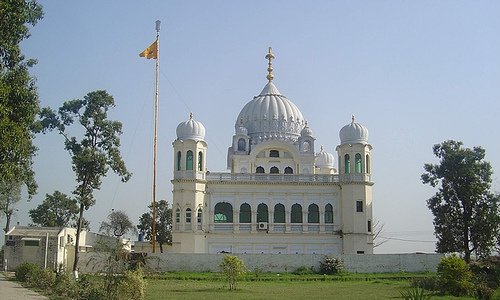
Indian External Affairs Minister said that the building of a tarred corridor between the Dera Baba Nanak in India and the Gurdwara Kartarpur Sahib in Pakistan Narowal District, could serve as a possible confidence building measure between the two countries. Indian Minsiter was visiting Dera Baba Nanak at the invitation of Punjab Chief Minister to assess the feasibility of the corridor to facilitate pilgrims.
Indian Minister said it was necessarily to create a good relationship with Pakistan, as "We have already opened two routes with Pakistan and are ready to open more routes so that more people come and know each other, and remove existing misunderstandings."
The minister announced that the Indian Government would send a group of experts to conduct a feasibility study for the construction of the much in demand corridor from Dera Baba Nanak to Kartarpur Sahib. He said the team would submit a report to the government, following which the matter would be discussed with Pakistan. If Islamabad agreed to proposed project, it would be immediately implemented, he added. Mukherjee visit to the border was welcomed by various Sikh organizations.
Once the corridor was in place, Sikh devotees could enjoy a hassle-free sikh pilgrimage, instead of taking the circuitous journey via Wagah, Lahore and Narowal. The region would also experience heightened economic and sikh tourism activity as a result. Sikh pilgrims have been demanding a safe passage to the Gurdwara Kartarpur Sahib from Dera Baba Nanak for years.
Thursday, August 14, 2008
Sultanpur Lodhi in Punjab on the world religious tourism map
Sultanpur Lodhi will be the first place in Punjab to be on the world religious tourism map because of its sanctity and heritage value. This was disclosed by Chief Minister of Panjab. The CM also paid obeisance at Ber Sahib gurdwara on the occasion of the prakash purb of Guru Nanak Dev.
Representatives of the World Tourism Organisation had visited Punjab to identify places that have religious importance and Sultanpur Lodhi had been identified as a befitting place to be on the map. No place could hold more importance since this is where the Guru attained enlightenment, he pointed out.
At present, the Tourism Department is implementing a Rs 3.61-crore project to promote tourism in the Kapurthala - Sultanpur Lodhi tourist circuit and the ecological restoration of the Pavitar Bein project has been expedited. Keeping in view the religious value of this holy town, the government had initiated a series of steps to develop the city under the guidance of the newly constituted Sultanpur Lodhi Development Board. The infrastructure, health facilities and transport connectivity of this historic town would also be upgraded which would further boost sikh religious tourism.
Friday, August 08, 2008
Delhi Gurudwaras build ramps, wheel in faithful
Delhi ramps are with a difference. They will not see style statements being made on them but will see the differently abled devout go right up to the threshold of the Granth Sahib. Stairs at places of worship are a problem for the elderly and the differently abled. Keeping this in mind, the Delhi Shiromani Gurudwara Prabandhak Committee (DSGPC) has begun a drive to make Delhi Gurudwaras easily accessible to all.
While the government is still planning to make offices and public places differently abled-friendly, the DSGPC has completed renovations on a second Gurudwara in the city. After Gurudwara Bangla Sahib, Nanak Piao in Azadpur has completed the construction of access ramps. Alongside the staircase, these green-carpeted ramps will help the wheelchair-bound and those who can’t climb steps.
With constant complaints coming in from devotees at Bangla Sahib, the authorities finally decided to take concrete steps. “A place of worship is for everyone and it is our responsibility to ensure that no one is denied the opportunity to visit the gurudwara. We did notice that a large number of the elderly and the differently-abled had to stop coming just because they couldn’t climb stairs. Besides constructing ramps, we have also made provisions for wheelchairs,” a Sewadar said.
Ever since the ramps were put in place, a number of devotees have been coming in wheelchairs. They are comfortably wheeled up by their family members.
Monday, June 23, 2008
Amritsar Gets Tourism Police
Amritsar seeks to safeguard the interests of tourists who fall victim to crooks and cons. AMRITSAR – One of the most popular tourist cities in Punjab his hoping a 30-person special police squad will help protect its 100,000 daily visitors. Tourists have often fallen victims to cheats and touts and ended up losing their belongings and valuables, said Punjab Chief Minister Parkash Singh Badal as he announced the formation of the Amritsar Tourism Police by the city’s district police department.
The tourism police will be stationed around-the-clock at Darbar Sahib, the airport, the railway station, bus stands and the Attari border.
"Special training has been imparted to these officers in tourism management,” said Kunwar Vijay Pratap Singh, Amritsar’s senior superintendent of police, who will personally supervise the 30-member squad led by Inspector Ramnish Kumar.
“The main objective of the Amritsar Tourism Police will be to prevent harassment of tourists by touts, help in getting transport and lodging at appropriate rates and help avoid hassles at the railway station, airport, bus terminals and other important tourist locations."
At a joint news conference Thursday, the Punjab chief minister lauded the effort of the local police in protecting the city’s burgeoning tourist population.
"Amritsar is emerging as a sikh tourism hub, one of the most visited places in the world with about one lakh (100,000) visitors who come here every day,” Parkash Singh said. “They include a large number of devotees from other sates in India as well as from the foreign countries.”
It is not known whether tourists in need will be able to recognize a tourism-police officer from a regular officer.


Friday, June 13, 2008
See Punjab and Gurudwaras through www.sikhtourism.com
Even though officially there is a Tourism department under Punjab Government but there is nobody to answer your enquiry about any place, gurudwara or tour. In this regard, there is a private travel website www.sikhtourism.com launched by one web professional Parvinder Singh. Sikhtourism website offers all the tours on Sikh Pilgrimage, Gurudwara Yatra and Punjab Tours. Even though, Parvinder Singh is also wokring for money, still he offers all the information, tour details, train & flight timings and other required details without expecting the business.For more information on this website, see at www.sikhtourism.com
Punjab never presented itself as a tourist destination
The Punjab government has joined hands with United Nations World Tourism Organisation (UNWTO) to promote tourism in the state. The 10 member team, having know-how in human resources, environment, marketing, infrastructure planning, business consultant is being led by UNWTO leader, Richard Batchelor. Batchelor is busy preparing a master plan to build the brand image of Punjab as tourist destination since last February. He has worked in West Bengal and Orissa to tourism the states’ tourism. Batchelor, who has 27 years of experience in the tourism sector, told how Punjab could become an attraction for the international tourists .
“The tourism ministry has never presented Punjab as a tourist destination. No wonder, there are hardly tourist information centres. Moreover, there is a dire need of having tour guides. Public-private partnership (PPP) can play a big role in improving the infrastructure. Besides pumping in the money, there is need for proper marketing the state”, he added.
Richard said Punjab should be presented as a religio-heritage and farm tourism destination. According to him, heritage towns like Patiala, Kapurthala, Bathinda, Sultanpur Lodhi, Anandpur Sahib, Fatehgarh Sahib, Kiratpur Sahib with magnificent architectural value, rich heritage and fascinating history had ‘amazing’ but unexploited tourism potential.
Even though officially there is a Tourism department under Punjab Government but there is nobody to answer your enquiry about any place, gurudwara or tour. In this regard, there is a private travel website www.sikhtourism.com launched by one web professional Parvinder Singh. Sikhtourism website offers all the tours on Sikh Pilgrimage, Gurudwara Yatra and Punjab Tours. Even though, Parvinder Singh is also wokring for money, still he offers all the information, tour details, train & flight timings and other required details without expecting the business.
For more information on this website, see at www.sikhtourism.com
Saturday, April 19, 2008
Hi-tech Sikh museum set to come up at Nanded.
Perhaps it is time for Sikh museums to spring up in many places, and the development is in keeping with the fervour of religiosity inspired largely by the Diaspora efforts and the celebrations of the Guru'ta Gaddi Diwas. Now it seems a state-of-the-art Sikh museum is set to come up at Nanded at a cost of Rs 20 crore as part of tercentenary celebrations of Gurta Gaddi Diwas.
The development has been confirmed by Nanded's Takht Sachkhand Sri Hazur Abchalnagar Sahib Gurdwara Board chairman Dr P.S. Pasricha who said latest technologies will be used in the new museum.
"Visitors will be imparted information about Sikh religion in either of four languages - Punjabi, English, Hindi and Marathi. The touch screen systems, latest gadgets, and many attractions will punctuate the over 30,000 square feet area. The museum will employ graphics and animation strategies and technology shall be put to use to pass on the message of Sikh gurus to youth, particularly those residing abroad, to save them from ever-increasing western culture influence," Pasricha, the former Maharashtra police chief, said.
The first phase of this museum-cum-art gallery would be made operational in 13,000 square feet area within next two months, while the entire project would be completed by October-end. Pasricha said approximately 11 acres of land surrounding the complex was being developed with landscaping and fountains. Fountain shows are being planned for the night to describe Sikh religion.
Pasricha also said Godavari riverfront is being developed and construction of 100-feet roads on both sides of the river was undertaken by the board. Godavari will form an aquaduct and will provide a feeling of divinity and spirituality to all those who will enjoy the fascinating scenery of the original Godavari. Efforts were on to tap religious tourism with construction of special NRI Yatri Niwas with luxurious rooms and suites of international standards.
Pasricha is also leading efforts to ensure that the new airport at Nanded, likely to operational from May 1, 2008, be named after Guru Gobind Singh.
Wednesday, November 14, 2007
Why do Sikhs celebrate Diwali ?
The festival of Divali is an important event for most of the South Asian community. For Hindus it represents the day when the mythological god King Rama came back to his capital after 12 years of exile. Rama’s subjects were so happy to see him that they lit divas (lamps) and set of firecrackers in honour of the event. Even today Hindus celebrate this event with great happiness and joy. On this day they worship fire and the goddess of wealth, Lakshmi.
Why do Sikhs celebrate Divali? When we look into most history books, we can gather that the reason that Divali is celebrated is as follows :
After the torture and death of Sri Guru Arjun Dev Ji, by the order of Jahangir (the emperor of India at the time), the Mogul administration started to become uneasy due to the sudden popularity of Sikhism. Chandu, an advisor of Jahangir, was the one who had suggested the torture of Sri Guru Arjun Dev Ji. He suddenly felt threatened at the popularity of the Sikhs and decided to advise the king to get rid of the next Guru of the Sikhs as well. Jahangir decided that this was a good idea and summoned Guru Hargobind Ji to his court where he had Guru Ji imprisoned in Gwalior fort where 52 innocent Hindu Princes were imprisoned as well. During imprisonment, the Guru noticed that all the princes were depressed and forlorn with their treatment in the jail and were in very unhealthy conditions. The Guru helped the princes regain their health and taught them spiritually. When the Guru was granted freedom, he refused to leave until he had gained the release of the 52 Hindu kings too. The emperor then said that all those princes that could hold on the Guru’s clothes would be liberated as well. Guru Ji had a special cloak made which had 52 strings sewed on it and each prince held on to a string. Thus all prisoners were freed. It was in this respect that Guru Hargobind became known as “Bandi Chor” or the Releaser of Prisoners. When Guru Ji reached Amritsar, it was Divali day and Sikhs celebrated the homecoming of the Guru by lighting diyas. To this day Sikhs celebrate Divali and in honour of Guru Hargobind Ji and his return.
So, it’s really quite simple. Sikhs do have their own Diwali … right? Maybe not.
Subscribe to:
Posts (Atom)