Showing posts with label khalsa. Show all posts

Wednesday, March 11, 2009

Hola Mahalla at Anandpur Sahib

Hola Mohalla or Hola Mahalla or simply Hola is a Sikh festival that takes place on the first of the lunar month of Chet which usually falls in March. This, by a tradition estabished by Guru Gobind Singh, follows the Hindu festival of Holi by one day; Hola is the masculine form of the feminine sounding Holi. The word "Mohalla" is a Punjabi word that implies an organized procession in the form of an army column. But unlike Holi, when people playfully sprinkle color, dry or mixed in water, on each other, the Guru made Hola Mohalla an occasion for the Sikhs to demonstrate their martial skills in simulated battles.

Together the words "Hola Mohalla" stands for "mock fight". During this festival, processions are organised in the form of army type columns accompanied by war-drums and standard-bearers and proceeding to a given spot or moving in state from one gurdwara to another. The custom originated in the time of Guru Gobind Singh who held the first such mock fight event at Anandpur in February 1701.

The foothills of the Shivaliks in Ropar district of Punjab's north-eastern region, especially around the historic townships of Anandpur Sahib and Kiratpur Sahib, have, since 1701 been playing host to Hola Mohalla. Recently, the Indian government accorded it the status of a national festival. The military exercise, which was personally supervised by the guru, was carried out on the bed of the River Charan Ganga with the famous Hindu temple of Mata Naina Devi in the Shivaliks as the backdrop.

This annual festival held at Anandpur Sahib in Punjab and now replicated at other Gurdwaras worldwide was started by the tenth Sikh Guru, as a gathering of Sikhs for military exercises and mock battles on the day following the festival of Holi at Anandpur Sahib. It reminds the people of valour and defence preparedness, concepts dear to the Tenth Guru who was at that time battling the Mughal empire and the hill kings. On this three-day grand festival, mock battles, exhibitions, display of weapons, etc., are held followed by kirtan, music and poetry competitions. The participants perform daring feats, such as Gatka (mock encounters with real weapons), tent pegging, bareback horse-riding, standing erect on two speeding horses and various other feats of bravery.

There are also a number of Darbars where the Sri Guru Granth Sahib is present and kirtan and religious lectures take place. On the last day a long procession, led by Panj Pyaras, starts from Takhat Keshgarh Sahib, one of the five Sikh religious seats, and passes through various important Gurdwaras like Qila Anandgarh, Lohgarh Sahib, Mata Jitoji and terminates at the Takhat (Keshgarh).

For people visiting Anandpur Sahib, langars (voluntary community kitchens) are organized by the local people as a part of sewa (community service). Raw materials like wheat flour, rice, vegetables, milk and sugar are provided by the villagers living nearby. Women volunteer to cook and others take part in cleaning utensils and other manual tasks that need to be carried out. Traditional cuisine is served to the pilgrims who eat while sitting in rows on the ground. (Pangat)

The popularity of this festival may be judged from the fact that out of five Sikh public holidays requested by the Khalsa Diwan, Lahore in 1889, the Government approved only two - Holla Mahalla and the birth anniversary of Guru Nanak. Hola Mahalla is presently the biggest festival at Anandpur.

Sunday, November 02, 2008

Rousing welcome to Guru Granth Sahib at Sachkhand Hazur Sahib

The Guru Granth Sahib was given a rousing welcome at the Takhat Sachkhand Shri Hazur Abchalnagar Sahib Gurdwara, Nanded on Thursday as it arrived for consecration in connection with 300 years of its elevation as the eternal Guru of Sikhs.

This Gurdwara is central to the ‘Gurta Gaddi’ celebrations, for which pilgrims from across the world have been registering since October 27 when the festivities actually began. Prime Minister Manmohan Singh was among the devotees who paid their obeisance at the Gurdwara on Thursday.

Music and colours that are typical of Sikhs characterised the Gurta Gaddi ‘nagar keertan’ procession, which started in the morning from the Nagina Ghat Sahib Gurdwara on the banks of Godavari. The Guru Granth Sahib was carried in a ‘palki’ (palanquin) placed in a specially designed vehicle.

The Gurta Gaddi diwas was one of the two most important days, the other being the observance of Guru Gobind Singh’s ‘parlok gaman’ (departure for the heavenly abode) on November 3.

The straight road between the two Gurdwaras was choked with an estimated 3 lakh pilgrims. The bright saffron and blue of the Nihangs and Akalis and the white clothes worn by other devotees lent colour to the procession. Devotees danced ‘bhangda’ to the robust beats of the dhol and the band and sang devotional songs. Some marched to Sikh martial tunes. The bhangda dance provided for the folk component, while the keertans gave a touch of devotion. The martial slogan Bole so nihal ... Sat Sri Akal and the tune Deh Shiva bar mohe ehe shubh karman te kabhon na taraun ... ” complemented the other kinds of music.

The sacred Guru Granth Sahib was received at the main gate amid the ‘shastra salami’ of swords. The process of enthroning it included its ‘prakash’ and application of sandalwood tilak and aarti. The Guru Granth Sahib was opened at random for the ‘hukamnama’ or the edict for the day.

Friday, September 12, 2008

Hazur Sahib, Nanded readies to receive Sikh multitudes for Gurta Gaddi Diwas

Hazur Sahib
Hazoor Sahib
With the historic day less than two months away, massive preparations are afoot to prepare for the multitudes of Sikhs that would throng this historic religious town for the Tercentenary celebrations of the Guruship of Guru Granth Sahib. Situated on the banks of the Godavri, the fourth Takht of the Sikh nation at Nanded is gradually sprucing up to welcome the sea of humanity that is likely to reach here on or around October 20 to celebrate a concept unparalleled in the religious history of the world. All religions have their scriptures and all are sacred. The Sikhs are blessed with having their Guru – their World Teacher – with them all the time. Sikhs will celebrate the unique bestowing of Guruship to the Word of the Gurus by the tenth Master, Guru Gobind Singh, in 1708 at Nanded, before he passed away.

Around the main Gurdwara and the famous Baba Nidhan Singh Langar, cleanliness on the streets and in the inn and the outer façade of the Langar Sahib is noteworthy.

Though there is no sarovar surrounding the main Gurdwara like Darbar Sahib Amritsar, the new periphery of Huzur Sahib now has some architectural resemblance to the housing complexes that surround the Golden Temple. The resplendence and glory of the neighbourhood is gradually getting a sheen though the roads and other infrastructure leading to the main sanctum sanctorum, the road outside the railway station and the airport are still to be completed. The Takht management committee expects all preparations to be finalized before the D-day.

In twenty villages around Nanded, tents with basic hygiene and sanitation facilities are being set up by the Maharashtra government. The Takht Management Committee has also built more inns and rest houses for visitors from India and foreign countries.

Around the historic Gurdwaras of Nanded, all efforts and activities are by the Sikh Sangat. The organization of tours and travels is also by the Sangat themselves. Except for some roads which are being rebuilt, which in any case is the responsibility of the state, there was no visible evidence of any significant expenditure by the state or central government, the SGPC or DSGMC. As in the case of all centennial celebrations of the Sikhs over the last decade, as far as these organizations are concerned, Sikhs largely feel there will be some uproar for a week and then it will be back to mundane basics.

Kar Sewa Babas are making military style preparations for the Langar as they expect to feed lakhs of people during the course of the celebrations. Langar utensils are being purchased in thousands and a fleet of volunteers are being pressed into the gigantic task.

Guru Gobind Singh’s clarion call in 1708 was unmistakably clear: “Agya Payi Akal Ki, Tabe Chalayo Panth, Sabh Sikhan Ko Hukam Hai, Guru Manyo Granth.” – By order of the God Almighty, the Khalsa Panth was formed. It is a diktat to all Sikhs that henceforth your Guru is only the Granth. This call and its deeper meaning have rattled many religious thinkers and the concept of the Word as the Guru has still to be appropriately explained by the Sikhs to the world.

The last days of the tenth Master, Guru Gobind Singh was spent at Nanded and when the Sikh world would celebrate the Guruship of Guru Granth Sahib, it would also recall the anniversary of the passing away of the Tenth Master. The consciousness of the Sikh people to revere the teachings as enshrined in Guru Granth Sahib and which teachings are not only that of the Sikh Gurus but also other religious leaders of the Bhakti movement and even before has brought them in confrontation with many pseudo-movements within the Sikh fold and outside it -which do not adhere to this doctrine. Forces attempting to undermine the distinctness of Guru Granth Sahib abound but a very large section of the community continues to have abiding faith in it as a living embodiment.

As usual and as expected, I could not find any literature in Punjabi, English, Hindi or the local language Marathi inviting the Sangat to the Takht or telling the visitor the significance of the coming occasion. The 300-Saal–Guru de Naal T shirt was omnipresent everywhere in the stalls all along the promenade outside the Takht.

Abchalnagar incorporates the land of some forty villages donated two centuries ago by the Nizam of Hyderabad -Sikhandar Jah to the Sikhs in gratitude of the support given to him by the Sikh armies of Maharaja Ranjit Singh. Very little of that land remains as a majority of it has been frittered away by a lackadaisical and short-sighted management committee whose custodians have invariably failed to protect the interests of the Sikhs under temptation of pecuniary gain and leadership and political pressure of the local government.

The destruction of the heritage sites-the Ramgharia Bunga and the Baradari alongside the Takht Sahib Gurdwara, the need for upkeep and maintenance of all the historic Gurdwaras in around fifty kilometer radius of Takht Apchalnagar Huzur Sahib, the complete rehabilitation of those families who have been uprooted from their home and hearth to make way for expansion plans, the democratization of the management set-up of the Takht and the poverty of the local Sikhs were stark realities one finds difficult to ignore. One also hopes that with such huge focus on the celebrations, the various management committees and voluntary organizations the world over would not continue to ignore this aspect once the celebrations are over.

After 300 years with the Guru, there should be no need left for the community or any of its individuals to indulge in self-pity. The community needs to stand tall, capable and strong and be counted amongst the comity of nations. If the Sikh nation does succeed, the objective of spending millions at Nanded would have been achieved.

Tuesday, September 02, 2008

World's first Sikh University to come up at Fatehgarh Sahib in Punjab

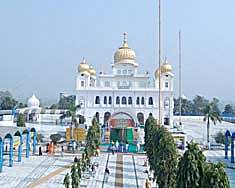
Fatehgarh Sahib, Punjab, is a holy town for Sikhs, where two sons of the 10th Sikh Guru, Gobind Singh, attained martyrdom in the 18th century, is set to be home to the first Sikh university - the Sri Guru Granth Sahib World University.

Punjab Chief Minister Parkash Singh Badal will Monday lay the first stone of the foundation monument - the 'Minar-e-Ikonkar' (Tower of God is one) - in this historic Sikh holy town, around 60 km from Chandigarh.

The university, spread over 84 acres given by the Shiromani Gurudwara Prabandhak Committee (SGPC), is coming up in an year which also marks the 300th anniversary of the 'Gurgaddi' (installation) of the Sikh holy book, Guru Granth Sahib, at 'Harmandar Sahib', the holiest of Sikh shrines, in Amritsar. Though founded with traditional values espoused by the Sikh religion, the university will deal with contemporary issues like the authentic interpretation of Sikhism in the modern context and idiom, role of Sikhism in the making of the 21st century society and the third millennium civilization, a state government spokesman said.

It also aims at addressing contemporary problems of Sikh identity vis-a-vis forces and processes of globalisation, facts about the Sikh diaspora and role of Sikhism and global interfaith dialogue, he added.

Sikhism is one of the youngest religions in the world, founded by the first Sikh guru, Nanak Dev, in the 15th century. The Sikhs, considered one of the most progressive communities, traditionally hail from the north Indian state of Punjab.
Besides the routine courses in arts, science and other fields, the university will focus on emerging technologies such as bio-technology, nano-technology, information technology and disciplines like ecology, human rights, feminism, empowerment of the down-trodden and other related spheres.

To give the university a 21st century outlook, it is looking at multi-national companies and other international universities for tie-ups. The spokesman said that arrangements will be made with foreign universities to enable scholars of Sri Guru Granth Sahib World University to be sent abroad as part of the course study.

Regional and overseas extension centres of the University will be established in India, North America, Europe, Southeast Asia and other countries wherever Sikhs and Sikhism have reached.

The university authorities are also planning to rope in the Sikh diaspora in the new venture.

The university also gives the students an option to undertake advanced studies in Sikhism - its philosophy, ethics, relation with other religions, history, music, linguistics, holy shrines and historical places associated with the religion, architecture, paintings, way of life, martial arts, diaspora and role of Sikhism in the 21st century.