Friday, September 07, 2007

Sikh Panj Takht Tour

The Five Takhts (Panj Takht) :'Takht' which literally means a throne or seat of authority is a result of historical growth of Sikhism. There are five Takhts and these Takhts are the five gurudwaras which have a very special significance for the Sikh community. The first and the most important one was established by Guru Hargobind in 1609. It is called 'Akal Takht' (the Throne of the Timeless God) and is situated just opposite the gate of Harmandar Sahib - The Golden Temple, Amritsar. The Guru established it, because he thought that secular political matters should not be considered in the Golden Temple, which is meant purely for worship of God. Here the Guru held his court and decided matters of military strategy and political policy. Later on, the Sikh commonwealth (Sarbat Khalsa) took decisions here on matters of peace and war and settled disputes between the various Sikh groups. The Sarangi singers sung the ballads of the Sikh Gurus and warriors at this place and robes of honour (saropas) were awarded to persons who rendered distinguished services of the community of men in general.

Sunday, July 22, 2007

Punjab becoming education hub

Punjab, which is known as agriculture state, is now getting another identity as an education hub of North India. Students unable to get admissions in well-known colleges in Delhi have been coming to Punjab for higher studies due to the heavy investment by the private sector in higher education. Apart from Punjab Technical University, which has a vast network of colleges all over the state, new private university, Lovely Professional University has also become popular among students from all over the country. It recently attained the status of the first professional university of Punjab. The university is running more than 50 courses, including those in engineering, management, information technology and pharmacy. 
 
For the last few years, the private sector has shown a keen interest in promoting higher education in Punjab. They have opened many big campuses in cities in Punjab to provide world class education along with placement opportunities after completion of the course. In the coming years, a school of excellence in engineering will be opened in Jalandhar through a collaboration of UK-based Caparo Group, owned by industrialist Lord Swaraj Paul, and Punjab Technical University. 
 
There are five universities in Punjab — Guru Nanak Dev University, Punjab Technical University, Punjab University, Punjabi University and Baba Farid Medical University. 
 
Due to being a hub for non-residential Indians, several international educational institutions have links in Jalandhar. 
 
The Cambridge University of London has already given affiliation to two of the city's schools and from the forthcoming academic session, the first Canadian school in the country will be opened here. 
 
As a rule, PTU gives 15 per cent of its seats to students from other states provided they have cleared the national entrance exam of AIEEE. 

Punjab Tours : www.sikhtourism.com
 

Wednesday, July 11, 2007

Phulkari, embroidery art of Punjab

Phulkari, an art of decorating shawls, dupattas with embroidered floral motifs developed in the 15th century in Punjab. Phulkari, is a skillful manipulation of single stitch that provides interesting pattern on the cloth. The smaller the stitch, finer is the quality of the embroidery. The silk threads in golden yellow, red, crimson, orange, green, blue, and pink are usually employed for the embroidery. The notable aspect of this technique is that single strand was used at a time, each part worked in one color and the varied color effect is obtained by clever use of horizontal, vertical or diagonal stitches.
 
The base cloth that was used for Phulkari in olden times was usually homespun cloth. In Phulkari when the design is worked very closely that  even a square inch of the base cloth is not visible then it is called 'Bagh'.  Besides floral motifs, birds, animals, human figures, vegetables, pots, buildings, rivers, the sun and the moon, scenes of village life, and other imagery were embroidered. Mention must be made of dhaniya bagh (coriander garden), motia bagh (jasmine garden), satranga bagh (garden of rainbow), leheria bagh (garden of waves) and many other depictions. Young women in Punjab often created Phulkari for their trousseau. Many folk songs on Phulkari are part of Punjab culture.
 
Sikh Culture news : www.sikhtourism.com 

Friday, June 29, 2007

Indian Idol Sikh Style: Hunt for kirtan stars

On Sunday, June 24, 2007 evening in Kolkata was the final of a talent hunt with a difference. The show, modelled on Indian Idol, tried to identify the "gurbani kirtan talent of the year".  At Sant Kutiya Gurdwara, Bhowanipore, the 10 finalists went head-to-head for the tuned-in ears of the judges, all of whom are experts in devotional music. An audience poll was also conducted.

The event was organised by Sikh Heritage, a group of youths who spread the message of Sikhism across the country. It was sponsored by Shiromani Gurdwara Prabandhak Committee and Sant Kutiya Gurdwara Committee, Calcutta.

"The competition had three rounds, with only the best in each round making it to the next. Unlike in other kirtan competitions, the participants got to sing before a huge audience. The original forms of the kirtans were sung," stated Manvika Uberoi of Sikh Heritage. Over 175 singers took part in the preliminary round, held at the Bharatiya Bhasha Parishad auditorium, on Shakespeare Sarani. Over 130 of the contestants were from the city. The outstation participants came from Asansol, Ranigunj, Sambalpur, Durgapur and other towns. The singers were divided into three groups, according to their age: Group A for those up to 15, Group B for those between 15 and 19 years and Group C for singers 19 and above. After the preliminary round, 32 contestants were shortlisted for the semi-finals, which were held at Gurdwara Sant Kutiya on Friday and Saturday. Four of the semi-finalists were non-Sikhs — three Bengalis and another singer from Bihar. All the contestants were trained for 10 days before the semi-finals. The three Bengalis made it to the finals.

The winner from each group will get a cash prize of Rs 10,000 and a chance to perform in and outside the city, including at the Golden Temple. Singing kirtan at the Golden Temple is considered a great honour. One of the three will become the "gurbani kirtan talent of the year" in the city.
Music director Bholanath Mukhopadhyay was one of the judges. The other judges were from Amritsar and are associated with the Golden Temple. According to Uberoi, the competition was an attempt to make traditional music popular among Sikh youths.
 
Sikh Culture news : www.sikhtourism.com 

Monday, June 18, 2007

Amritsar joins race with Chandigarh for India's first smoke-free city

Amritsar that houses the sacred Golden Temple for the Sikhs worldwide is in contention with Chandigarh to become country's first smoke free city.

Groups like Amritsar Vikas Manch (AVM) have demanded to make Amritsar become smoke-free city before July 1, since Chandigarh administration is working to get the city declared smoke free by that date.

In a letter to Chief Minister S. Parkash Singh Badal, the patron of the group Dr. Charanjit Singh Gumtala urged the former to take urgent steps in this direction. According to media report Chandigarh will have designated smoking areas at all public places and buildings to ensure that smoking is restricted and the general public is not forced to passively inhale smoke. The groups are stating that Amritsar deserves first smoke-free city status because it is the holy city and is known as Mecca of the Sikhs, where Guru Granth Sahib -the holy Sikh scripture- was written.

Keeping the importance of the holy city, smoking and meat shops were banned around the 200 meters periphery of the Golden Temple in 1982. Besides protecting children and other citizens from the harmful consequences of tobacco and smoking, such an initiative will improve the global image of the Amritsar and will be helpful in promoting transport, tourism and business.

Visit Amritsar and Chandigrah : http://www.sikhtourism.com/

Wednesday, June 06, 2007

Punjabi Jutti most popular in holy city of Amritsar

Punjabi Jutti (footwear of Punjabi style) has become thriving business to its manufacturer due to its aggressive demand in the market. Presently Punjabi Jutti makers getting orders in bulk form all over the India and abroad.
 
Amritsar is one of the Asia's biggest market around the holiest Sikh shrine Golden Temple where the Punjabi Jutti being manufactured in large scale and being exported to foreign countries like UK, America, Germany, Canada, Switzerland Singapore and Hongkong.
 
Punjabi Jutti was known for its immaculate embroidery and varied hues, which made it a popular, wear for the people of the region for all types of occasions. Punjabi Jutti is also known as century-old tradition. In foreign countries where having sizable population of Punjabi people have great demand of Punjabi Jutti from the holy city Amritsar. Now foreigners have also sheer demand for Punjabi footwear in foreign lands from Amritsar.  Since these footwear are easy to wear and more comfortable. In rural and urban Punjab majority of the masses including female and old aged people especially prefer to use Punjabi Jutti due to its comfort.
 
Balwant Singh Majithia a leading Punjabi Jutti manufacturer said, " This is his third generation in this profession and he manufacture different style of Punjabi Jutti on demand and one has to keep wait for one month. Moreover due to the summer season there is hot sale of Punjabi Jutti throughout out the Punjab and traders are coming from Delhi and Mumbai to place him order in bulk.
 
Now Punjabi Jutti becoming traditional footwear in the border town Amritsar and its surrounding area even neighboring states also following the same trend, informed Majithia. The graceful style of Punjabi jutti made with soft leather consisting artistic work on it being preferred by the young ladies too during social gathering. Now such footwear could also be seen in the fashion show as well as in the Bollywood industry, now it has become the essential items of cultural show. Even all the TV smalls screen plays also showing such footwear on marriage occasions.
 
Even it was the most favorite footwear of former Indian President Gyani Zail Singh, said Balwant Singh Majithia a Punjabi Jutti manufacturer  The elegant style, beautiful designs and soft leather of the footwear are attracting the fashion lovers everywhere, said Harjinder Singh trader.
 
The cost of ladies Punjabi jutti starts from Rupees two hundred to three thousand.The traditional teela, zeri wali and Sundi embroidery with Golden Thread has the look and designs is a magnet for any traditional fashion lover. A rough estimate, a dozen shopkeepers in Amritsar are engaged in the Punjabi Jutti business and their turn over is in tune of ten crore.


Friday, June 01, 2007

Patiala all set to regain past glory

Patiala is all set to restore its pristine glory and grandeur. Huge funds are being spent and the old heritage buildings are being refurbished and restored to its original glory.
 
Official sources say the state government has drawn up a series of plans to develop Patiala as a major tourist destination since the city is studded with palaces, museums and gardens, encompassing rich cultural and traditional architecture.
 
Sheranwala Gate, an ancient monument, would be rebuilt with its original grandeur and design with inbuilt gurdwara, temple, church and a mosque as a testimony to the age old cultural and secular values of the erstwhile princely state of Patiala.
 
The Mohindra Kothi has already been spruced up and now houses the newly established Rajiv Gandhi National University of Law from the current academic session. This is a temporary arrangement and the university will be shifted to its own campus soon. The building, which once housed the head offices of the Punjab Public Works Department, would be preserved and conserved as a heritage site along with "Maiji di Serai". The state government is also committed to preserve the landmark monuments marking the rich historical past like the Qila Mubarak, Old Moti Bagh Palace, Sheesh Mahal and Bahadurgarh fort as Patiala has been declared as counter magnet town under the NCR plan.
 
Patiala had historic gates built by the erstwhile rulers of this princely state. Now, the state has lost many of the gates owing to official neglect. These included the Lahori Gate, Sheranwala Gate, and Saifabadi Gate.There is a popular demand for the restoration of these gates. The Samania Gate, which was damaged a couple of years back, get repaired under the supervision of experts. Sirhindi Gate, near the Patiala-Rajpura road, was also reinforced almost seven years back when a portion of the roof of the gate came crashing following incessant rains. This gate has also got repaired and given a fresh lick of paint.
 
The sources said the Heritage Society had decided to take up the restoration of all historic gates. It was proposed to request corporate and industry houses besides other establishments to sponsor the maintenance of these gates.
 
Punjab Tour, Patiala Tours : www.sikhtourism.com 

Monday, May 28, 2007

Iraq keen to re-build damaged Sikh Gurudwara

Iraq is keen to rebuild a historic Sikh shrine commemorating Guru Nanak's visit to Baghdad, which had been destroyed by "fanatics" after the invasion of the country by US-led coalition forces, a top leader said on Friday.
 
Iraqi National Congress chief Ahmed Chalabi, one of Iraq's prominent leaders, who drove down through the desolate streets of Baghdad to the sacred Sikh site last night under heavy military protection, said "it has unfortunately been wiped out by fanatics because they thought it was against Islam". "It's shameful they cannot respect someone who has millions of followers," he told PTI at the gurdwara site along the river Tigris.
 
Iraqi officials escorting Chalabi informed him about the original design of the gurdwara that was built alongside the tomb of a Muslim religious leader, which has suffered no damage. "We will rebuild it," Chalabi said even as he admitted he did not know that a Sikh shrine had ever existed in Baghdad, which houses the Indian embassy.
 
The Iraqi leader, seen as close to the Bush administration, ruled out the possibility of the gurdwara being destroyed in military fire. "It was a mortar attack by some fanatic," he said, adding he believed it would have happened after the fall of Saddam Hussein.
 
News reports during the Iraq war had suggested the gurdwara had suffered damage in the attack, but there has been no official confirmation until now from Iraq about its condition. The visit to the site revealed complete destruction of the shrine. Chalabi, who broke the lock at the gate of the shrine's compound to inspect the site, pointed out that the shrine's marble floor had been pulled out and its roof razed to the ground.
 
Indian spiritual leader Sri Sri Ravi Shankar, who accompanied him, also requested immediate rebuilding of the gurdwara.
 
According to Sikh history, Guru Nanak, the founder of the faith, visited Baghdad and had a discourse with Bahlol Dana, a sufi teacher. The gurdwara commemorating the Guru's visit lies near what is now a devastated railway station in Baghdad. "The Sikh community has contributed a lot to Iraq. They have worked here in railways, construction and a lot of other activities. We respect them and will see to it that this is rebuilt," Chalabi said.
 
India and Punjab Gurudwara Tours : www.sikhtourism.com 

Wednesday, May 16, 2007

Gatka - an ancient Sikh martial art

The exact beginnings of Gatka are not clear. What is clear is that it emerged formally from its original birthplace in northern India during the times of the 6th Guru of the Sikhs, Guru Hargobind Sahib (early 1600s), who learnt and instructed his Sikhs to learn the martial art. However, Gatka existing long before then. Some have said that Gatka is the original grandparent of all modern martial arts which came out of northern India towards China.
 
The Sikhs mastered Gatka and perfected its use in battle. Many hundreds, if not thousands, of battles were decisively won by the Sikhs, despite almost always numbering far fewer than the opposing forces. The techniques within Gatka were combined with the spiritual practices of the Sikhs to create a perfect fighting system. Opposing forces are documented to have cursed the awesome Warrior Saints that the Sikhs were!
 
The Sikhs actively used Gatka in warfare for over 200 years, until they finally enjoyed peace under their own rule, free from persecution from the power-hungry Mughals who rested only when they were defeated. Since then, Gatka has been passed down as a tradition amongst the Sikh generations. With the emigration of Sikhs to western countries such as the UK, Gatka has grown again in the hearts and minds of the new generation of Sikhs. Now, in the 21st century, western martial artists are slowly beginning to recognise and enquire about Gatka. Such interest has forced the need for websites such as WarriorSaints.com to educate the world about the formidable art of Gatka.
 

Friday, May 11, 2007

Treat Anglo-Sikh war as first: MPs

Disagreeing with the view that 1857 was the First War of Independence, Tarlochan Singh, Rajya Sabha MP from Haryana, today said that it was a part of the movement for independence.
Tarlochan Singh, who was accompanied by Shiromani Akali Dal MPs Rattan Singh Ajnala and Virender Singh Bajwa, said that the 1845 Anglo-Sikh war was the fiercest battle against the Britishers.
He said the government was observing on a grand scale the 150th anniversary of the 1857 war but "no such functions were held during the centenary year in 1957 when Pandit Jawahar Lal Nehru was the Prime Minister."
The MP said they respected the 1857 martyrs and wanted that all those who were part of the movement should be paid respects. The MPs said they had raised the matter in the Parliament and Lok Sabha Deputy Speaker Charanjit Singh Atwal had supported their views.
Atwal argued that projection of 1857 as the First War of Independence was a "misnomer" as the Anglo-Sikh war preceded that.
The protest came midway through the function addressed by the President, Vice-President Bhairon Singh Shekhawat, Prime Minister Manmohan Singh and Lok Sabha speaker Somnath Chatterjee. It was attended by former Prime Minister Atal Bihari Vajpayee, UPA chairperson Sonia Gandhi, leader of opposition L.K. Advani, ministers, MPs and senior leaders.
The Vice-President, who had risen to address the gathering, was caught unawares when Atwal raised the issue.
Tarlochan Singh and Bajwa later said the 1845 war, led by Sikh General Shyam Singh Attariwala, has to be treated as the first War of Independence.

Monday, April 30, 2007

Face of Holy City Amritsar set to change

Face of Holy City Amritsar set to change
 
The much-hyped proposal of setting up the Amritsar Development Authority (ADA) on the patterns of the Delhi Development Authority (DDA) will be a reality now. Though the formal announcement will be made by Chief Minister Parkash Singh Badal on May 5, the SAD-BJP government has taken the decision to float the body for the overall development of the Holy City, which is plagued by inadequate infrastructure.
 
ADA would work with a "future vision". The Golden Temple, Durgiana Temple, Jallianwala Bagh and Wagah border attract pilgrims and tourists from all over the world. The city had long been neglected for being on the border. But now there will be a body of the people and for the people which will set an agenda of the overall planned growth. Though rules and regulations are yet to be framed, but ADA would be a civic body with maximum participation of the people. It's working has to be transparent and people-oriented and administration staff has to be well-acquaint with the future need of the city,
 
The city needs infrastructure. The roads are in bad shape… pilgrims and tourists are shocked over pathetic transport system, parking places and lack of enough hotels and restaurants. There has to be focused plan for the city,
 
Welcoming the move, Citizens' Forum and Amritsar Vikas Manch said they hope that expert and honest bureaucrats would be appointed in the ADA so that the history of the city remains intact. "The political interference has to be checked and the ADA should be answerable to the public," said a spokesman.
 
Besides streamlining city's traffic, more hotels should be set up and Rajasansi International Airport should be modernised, he added.
 

Wednesday, April 25, 2007

Punjab to follow Rajasthan's footsteps in Tourism


In an attempt not just to boost tourism but retain the rich cultural heritage of Punjab, the old palaces and forts in the state are on their way to resurrection. The Punjab Heritage and Tourism Promotion Board has identified palaces and havelis ' across the state that would be restored and run on a public-private partnership mode.


The Tourism Department, Punjab, has requested the respective departments in possession of the heritage monuments to vacate the premises so that they can be restored, maintained and thrown open to the NRIs' and the younger generations to get a feel or the erstwhile rich legacy. While the Punjab government has already signed an agreement with the Neemrana Hotels Private Ltd for the Rajendra Kothi, Patiala, that is likely to be thrown open to the public by mid-2008, others too are following suit.


"Among the palaces and old heritage monuments, some over 400 years old the ones at Malerkotla, Ludhiana, Jalandhar , Kapurthala, Faridkot, Bathinda and Sangrur have already been identified to be converted into heritage hotels ," said Jagjit Puri, secretary, Information and Public Relations, and director , Tourism, Punjab.


About 200 kms from Chandigarh, the Punjab Tourism department plans to pioneer the move with the capital of the erstwhile Jind State, Sangrur. Founded in the 17th century Sangrur remained the capital of the former independent state of Jind for over a century . Built by Maharaja Bhupinder Singh of Patiala, the Hermitage (Heritage monument) at the moment is with the Health Department, Punjab, running a TB Sanatorium.


"The response from the health department is awaited and the 44 acres at Hermitage will be developed under the PPP mode," said Puri. The Punjab government has in a communication written to the Health Department, Punjab, its intention to restore the Hermitage to be used to promote tourism in Punjab the reply for which is yet awaited.


Most of the heritage buildings in Punjab some in dilapidated conditions are being used by various departments to house their offices. The over 100-year-old Ladda Kothi, Sangrur, renovated by Punjab government is presently being used by the police department for training.


The Tourism Department, Punjab, will also request owners of private havelis' to partner the Heritage Board in promoting tourism. "We plan to join hands with owners of heritage buildings and havelis' to restore their properties. These can be converted to two star hotel accommodation for the budget tourist visiting Punjab," said Puri.


As an incentive to the owners the Punjab government has plans to work out the same on 80-20 profit sharing. While the 80 per cent of the revenue will go to the private owners the balance 20 will be go to the Punjab Heritage Board towards running costs.


Punjab Tours : www.sikhtourism.com


Tuesday, April 17, 2007

Pollution around Golden Temple, Amritsar alarming

The mushrooming of small and big hotels in the periphery of Golden Temple, smoke spewing from three-wheelers fitted with two-stroke engines and burning of garbage by the municipal corporation has raised pollution level around the Sikh shrine.
 
Preliminary reports of the Punjab Pollution Control Board (PPCB), which had installed four samplers on all top floors of the "parikarma" of the Golden Temple, had described the pollution level as alarming.
 
Talking to The Tribune, G.S. Majitha, executive engineer, PPCB, said there were more than 100 hotels around Golden Temple which had been frequently using generator sets in case of power failure. "These hotels are like full-fledged factories," he said. Expressing concern over the rising pollution level in the walled city, Majitha said his staff was shocked to see MC employees burning garbage there.
 
The problem is aggravated due to the use of adulterated fuels by vehicles, especially three-wheelers. The PPCB suggested that vehicles should not be allowed to park near the Darbar Sahib Complex.
 
Majitha said Amritsar, Jalandhar, Batala and Ludhiana had been marked as most polluted. According to the data collected by the PPCB, the suspended particulate matter (SPM) were beyond the permissible limits. The executive engineer said vehicular traffic contributed the most to the pollution in the city. There were 3,85,476 two-wheelers, 35,249 tractors and 2,082 buses running in Amritsar.
 
One of the inferences of study was that commercial diesel vehicles were being run on low-quality fuel. Many were being run on kerosene, which released toxic fumes that were responsible for itching eyes and respiratory problems. It also adds lead oxide, sulphur dioxide and nitric oxide to the air.
 
The historic city also has the dubious distinction of producing a large quantum of solid waste and garbage after Ludhiana - 600 tonnes daily.
 
Sikh Heritage and Gurudwara News : www.sikhtourism.com

Thursday, April 12, 2007

Indian Sikh pilgrims ask Pak. to relax visa regime


Sikh pilgrims from India, who are on a visit to Pakistan to mark the festival of Baisakhi, have asked the Pakistan Government to ease visa restrictions. The Pakistan Government should relax its visa policies so that more visitors from India could visit without hindrance, the Daily Times quoted them as saying on arrival।


The pilgrims said the followers of Baba Guru Nanak felt that it was the right time to forget past differences and promote peace, friendship and harmony between the two peoples.


"We have to promote love, peace and humanity in the region and this is only possible if Sikhs and Pakistanis commit themselves to live in peace। The fact that Pakistanis take care of our holy places is like loving us. We love Pakistanis and love Pakistan," Gurdeep Sing from Amritsar said.


Another pilgrim Ramesh Chander Sachdev said, "I am visiting Pakistan for the first time. I was born in Faisalabad 63 years ago and my family left our home when I was three years old. I have wanted to visit my home, but I do not have a visa for Faisalabad district. I appeal to the Pakistani Government to relax visa policies so that people like me can visit their birth places."


Sikh News : www.sikhtourism.com

Tuesday, April 10, 2007

NRI Dr Kartar Singh Lalvani offers to pay for restoration in Golden Temple

A non-resident Indian entrepreneur on Wednesday offered to pay for the "restoration" of the 300-year-old door at the Golden Temple and opposed any move to replace it.
 
"The door, known as Darshani Deori at the main entrance to the sanctum sanctorum, has a historic significance and I am prepared to pay for its conservation and restoration," Dr Kartar Singh Lalvani said.
 
73-year-old Lalvani, founder chairman of Vitabiotics, Britain's first specialist vitamin supplement company, who is also interested in the preservation of artefacts, said the door was originally part of the historic Somnath Temple in Gujarat before it was plundered by raiders from Afghanistan.
 
Lalvani, winner of the Asian of the Year award last year, said it was Maharaja Ranjit Singh who secured the door from the then ruler of Afghanistan Shah Zaman as part of a treaty after he defeated the marauders from Kabul. The door first offered to Somnath Temple but it was turned down.
 
A report quoted to SGPC executive member Kiranjot Kaur said the committee had recently decided to replace the door because its condition has deteriorated over the years.
 
The work was to be entrusted to the Birmingham-based Sikh missionary organization Guru Nanak Nishkam Sewa Jatha and plans had already been drawn up to import special timber from Africa.
Sikh Heritage and Gurudwara News : www.sikhtourism.com

Monday, April 09, 2007

Vanishing Sikh turbans finally get attention

In this new age of mass communication assaults and cultural penetrations, the Sikhs' turban, a distinguishing mark of the community is under constant threat, and many a Sikh youth are giving up this symbol of faith that has been responsible for centuries for the unique look of the community. Largely worn by the males, (though some womenfolk also do), the turban has been and is being discarded by many a Sikh youth who are getting their hair shorn.
Young Sikhs are abandoning the traditional headwear, wearying of the elaborate ceremony of maintaining long hair and knotting it under six yards of starched cotton.
Politically incorrect jokes, misplaced priorities and massive Bollywood onslaught have all contributed to the Sikhs taking a path which makes them 'patit' (apostate), but recently a number of efforts have been undertaken to pull back from the brink.
The SGPC has recognised the problem for many years now but has doen precious little to arrest the patit phenomena। "Across Punjab a large number of Sikh youth have cut their hair and, sadly, the turban-tying ceremony for teenage boys has also become rare, even in villages" lamented Avtar Singh Makkar, the SGPC chief. The jathedars of all Sikh takhts, the supreme seats of temporal power, have stressed the issue repeatedly but little emerged except verbiage over the time.
Now, a Punjabi singer Pammi Bai has sang songs in favour of turban, and featured many a known men from the world of arts and cinema. The SGPC, has declared the April 13 harvest festival of Baisakhi as International Sikh Turban Day. Two turban-tying schools have been founded in the holy city of Amritsar, and a competition to select "Mr Singh International", is expected to attract widespread participation.
Every region in Punjab has its own distinct style of tying a turban, with each claiming theirs to be the best, and Mr Singh contestants are to be judged on how stylishly their headgear is tied.

The present reigning champion, Navjot Singh Sidhu, an MP and former Test cricketer, recently held a procession in Amritsar to instill a sense of pride among Sikh youth. Meanwhile, concern over acts of violence in the West against Sikhs, mistaken for members of the Taliban, who also sport turbans, has also prompted overseas campaigns to "dignify" the headgear.
Sikhism and Sikh Culture : www.sikhtourism.com

Thursday, April 05, 2007

No money for heritage conservation says SGPC


Damaged and worn frescos inside the Darbar Sahib in desperate need of professional conservation and restoration. The damage has been exacerbated by poorly advised kar-seva in the past. Photograph Kurtas Singh.


In the recently passed Rs 330-crore ($76million) budget of the cash-rich Shiromani Gurdwara Parbandhak Committee, not even a penny has been earmarked for preservation and conservation of historic gurdwaras, Sikh art and creating awareness about heritage buildings. Angered by this, conservationists, artistes and social workers feel that the religious body managing gurdwaras in northern India must set up a heritage cell so that the history can be preserved and documented.


The artistes feel that the biggest danger to the Sikh art - comprising paintings, murals and frescoes decorating walls of the sanctum sanctorum of the Golden Temple - is from its custodian, the SGPC.


Recently, the SGPC came under condemnation for damaging heritage in the name of 'kar sewa' at various gurdwaras as murals were painted white, paintings destroyed and traditional Nanakshahi bricks were replaced with marble and shining stones.


"They (SGPC) and kar sewa babas have done more harm to the buildings than anyone else. The murals and frescoes at the Golden Temple are peeling off and the restoration at some sections has been improperly done, without taking care of the originality," rued state convener of the Indian National Trust for Art and Cultural Heritage (INTACH) Dr Sukhdev Singh.


He said the SGPC should realise the significance of historic buildings and art work and set up a heritage wing with experts on panels.


Art historians and critics said the SGPC employees were not aware of the importance of the heritage of gurdwaras. "When the Akal Takht was re-built after Operation Bluestar in 1984, the art was hit the most. Instead of preserving, the rich murals and frescoes were devastated," alleged Brij Bedi, a social worker. "It's a pain to see the rich heritage ruining. There is no one to stop the process," he said.


Bedi said the heritage wing should work as an advisory body to the staff and be consulted while restoring the art work.


Renowned artist Satpal Danish, whose forefathers were entrusted with the task of doing art work on the walls of the


Darbar Sahib, said, "In the utmost disgrace, glazed tiles were fixed on the ground floor of Gurdwara Baba Atal, situated in close proximity of the Golden Temple. We have been raising the voice against the damage being caused to the historic buildings, but there is no one to listen," he said.


"Many of the devotees and pilgrims are ignorant about the great artistic treasure. The paintings on the walls depict the 'janamsakhis' of Guru Nanak Dev and other Gurus," said Dr Sukhdev, adding that even the books and documents at Sikh Reference Library inside the Golden Temple complex were not being preserved professionally.


Some renovation of the upper domes and walls at the Golden Temple was carried out by INTACH a few years back, but the work was stopped by the SGPC without giving reasons. UK-based Guru Nanak Nishkam Sewa Jatha also carried out repairs, but the original craftsmanship was not preserved though the members claimed to have preserved the heritage.


SGPC chief Jathedar Avtar Singh, denying that the SGPC was unconcerned, said he would take up the matter in the executive body meeting and if decided, they would seek help of the experts.


Punjab and Sikh Heritage News : www.sikhtourism.com

Monday, April 02, 2007

Sikh Festival Baisakhi on April 14, 2007


Baisakhi is one of the major festivals of Sikhs and is celebrated with lot of enthusiasm and gaiety in the state of Punjab and all throughout the world where there is a significant Sikh population. For the large farming community of Punjab, Baisakhi Festival marks the time for harvest of rabi crops and they celebrate the day by performing joyful bhangra and gidda dance. For the Sikh community, Baisakhi Festival has tremendous religious significance as it was on a Baisakhi Day in 1699, that Guru Gobind Singh, the tenth Sikh Guru laid the foundation of Panth Khalsa-the Order of the Pure Ones.


Baisakhi Festival falls on the first day of Vaisakh month (April-May) according to Nanakshahi or Sikh Calendar. For this reason, Baisakhi is also popularly known as Vaisakhi. According to English calendar, the date of Baisakhi corresponds to April 13 every year and April 14 once in every 36 years. This difference in Baisakhi dates is due to the fact that day of Baisakhi is reckoned according to solar calendar and not the lunar calendar. The auspicious date of Baisakhi is celebrated all over India under different names and different set of rituals and celebrations. Baisakhi date coincides with 'Rongali Bihu' in Assam, 'Naba Barsha' in Bengal, Puthandu in Tamil Nadu and 'Pooram Vishu' in Kerala.


People of Punjab celebrate the festival of Baisakhi with exuberance and devotion. As the festival has tremendous importance in Sikh religion, major activities of the day are organized in Gurdwaras. People wake up early to prepare for the day. Many also take bath in the holy river to mark the auspicious occasion. After getting ready people pay a visit to their neighbourdood gurdwara and take part in the special prayer meeting organized for the day. At the end of the Baisakhi ardas, congregates receive specially prepared Kara prasad or sweetened semolina. This is followed by a guru ka langar or community lunch.


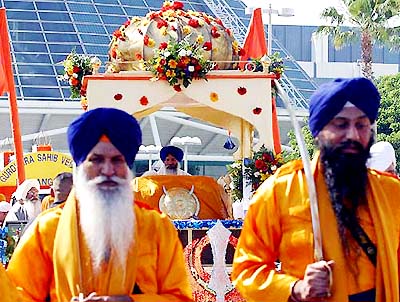
Later, during the day people of Sikh faith take out a Baisakhi procession under the leadership of Panj piaras. The procession moves through the major localities of the city amidst the rendition of devotional songs by the participating men, women and children. Mock duels, bhangra and gidda performances make the procession joyous and colourful.


For the large farming community of Punjab and Haryana, Baisakhi marks a New Year's time as it is time to harvest rabi crop. On Baisakhi, farmers thank god for the bountiful crop and pray for good times ahead. People buy new clothes and make merry by singing, dancing and enjoying the best of festive food.


Cries of "Jatta aai Baisakhi", rent the skies as gaily men and women break into the bhangra and gidda dance to express their joy. Everyday farming scenes of sowing, harvesting, winnowing and gathering of crops are expressed through zestful movements of the body to the accompaniment of ballads and dhol music.


In several villages of Punjab Baisakhi Fairs are organized where besides other recreational activities, wrestling bouts are also held.


Punjab and Sikh Culture News : www.sikhtourism.com

Friday, March 30, 2007

Sikh heritage project to be completed by 2009


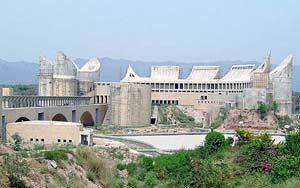
A heritage complex dedicated to Anandpur Sahib, the place where the Sikh religion was born 308 years ago in 1699, would be completed by March 2009.


Punjab Chief Minister Parkash Singh Badal Tuesday set the deadline for completion of the Khalsa heritage complex at Anandpur Sahib, 90 km from here. He said the complex would be dedicated to the people on the occasion of Hola Mohalla - a festival to celebrate the valour of Sikhs.


The Rs.2.24 billion project will showcase the evolution of the Sikh religion. It is aimed at giving correct information to the younger generation of Sikhs in India and abroad. The complex will house rare manuscripts, books, paintings and other artefacts to show the evolution of the religion.


The Punjab government has also announced that it will honour Moshe Safdie, an Israeli architect who had been involved in designing and implementing the project. The project was announced in April 1999 on the occasion of the tercentenary of the of the Sikh religion. An amount of Rs.1.14 billion has already been spent on the project, which has been delayed beyond its five-year deadline. Badal said that the remaining amount of Rs.1.1 billion would be made available for the project for its early completion.

Sikh Heritage News : www.sikhtourism.com

Wednesday, March 28, 2007

France apex court upholds turban ban

The apex court of France has dismissed a petition pertaining to wearing of turbans by Sikhs. The petition was filed on behalf of Sikh students staying in France. Their legal counsel in India, M S Rahi, who has also taken up the issue in Punjab and Haryana High Court, confirmed that the petition was dismissed in the second week of March.
 
Sixty seven-year-old Ranjeet Singh, who has been staying in Paris for more than 15 years now and has been denied social security perks, told TOI, "We will file a petition in the European Court of Justice in Luxemburg. The case will be filed by the Singh Legal Foundation in Luxemburg." Incidentally, a similar case is already going on at Strasbrough in France, the headquarters of European Human Rights Commission.
 
Didar Singh Nalvi, a member of SGPC from Haryana, who is closely following the case, is of the opinion that India should intervene in this case. "Wearing a turban is part of our religion. And somebody should educate them that it should not be associated with people involved in terrorism," he said. As per the present system in France, identity card, driving licence and security card should have a photo without a turban. SGPC has said they have raised the issue several times through diplomatic channels, but the government hasn't done much about it. About three years ago, wearing of a headgear was banned across all the schools in France and Sikhs were victims of this decision.
 
Sikhism News : www.sikhtourism.com